Aging In Place Is Now A Budget Line Item, Not An Afterthought.Especially In Newton Massachusetts
Three-quarters of older adults intend to stay in their homes. Almost none of them have priced what that actually costs, and in Greater Boston the number is large enough to belong in the retirement plan.
Seventy-five percent of adults age 50 and older want to remain in their current home as they age, according to AARP's 2024 Home and Community Preferences Survey. Yet 44% of that same group believes a move is inevitable, and 43% say their home would need modifications to be safe. That gap between intent and preparation is not a sentimental problem. It is a budgeting failure, and it is showing up on family balance sheets across Massachusetts.
The Massachusetts numbers make the case bluntly. Genworth and CareScout's Cost of Care data put long-term care costs in the Commonwealth well above national medians, with assisted living statewide running roughly $9,000 or more per month and Greater Boston running higher still. A semi-private nursing home room in the Boston metro averages north of $14,000 per month. Against those figures, a private-pay home health aide in Massachusetts, commonly quoted near $25 to $38 an hour depending on the market and shift complexity, starts to look less like a luxury and more like the variable-cost option in a category of very expensive fixed-cost alternatives.
The mistake affluent families make is not underestimating whether they can afford care. It is treating aging in place as the absence of a decision, the default that happens when no facility is selected, rather than as a funded program with its own capital costs, recurring labor costs, and failure modes.
The numbers: AARP's 2024 survey found 75% of adults 50+ want to stay in their current home, but 43% say their home needs modifications to be safe. Aging-in-place renovations commonly run $3,000 to $15,000, with full accessible bathroom retrofits starting around $15,000. Meanwhile, Genworth/CareScout data show Massachusetts long-term care costs exceeding national medians, with Boston-area semi-private nursing home rooms averaging over $14,000 per month.
1. Aging in place has a capital budget, and families skip it
Every institutional care option prices its physical plant into the monthly fee. Aging in place does not, so the family absorbs it directly. Grab bars, zero-threshold entries, widened doorways, stair lifts, and bathroom retrofits are one-time capital expenditures that national contractor data places anywhere from a few thousand dollars to $50,000 for structural work. A residential elevator alone can run $30,000 to $60,000.
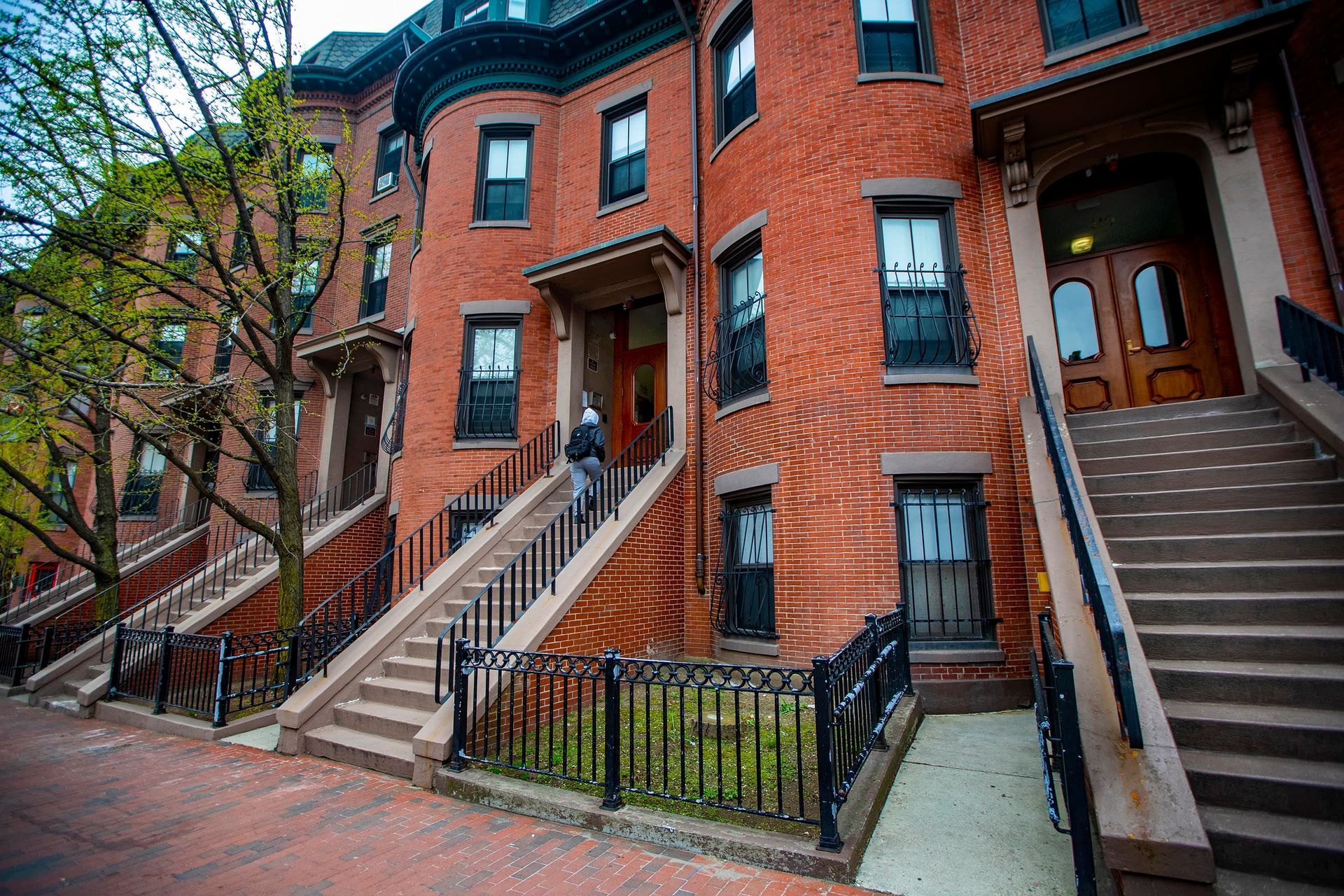
In older housing stock, retrofit costs skew toward the high end. That includes the center-entrance colonials of Newton, the mid-century capes of Reading and Burlington, and the multi-level homes of Lexington. A financially sophisticated family would never buy a rental property without underwriting deferred maintenance. The same discipline rarely gets applied to the house a parent intends to age in for the next fifteen years.
2. The recurring cost is a labor cost, and labor is the inflation risk
The operating side of aging in place is almost entirely wages. PHI's 2025 key facts report puts the national median wage for direct care workers at $17.36 per hour in 2024, with 36% of that workforce living in or near poverty and an estimated 9.7 million job openings in direct care between 2024 and 2034. That is a structurally undersupplied labor market with sustained upward wage pressure.
For a family budgeting a private-pay caregiver in Massachusetts, the implication is straightforward: model the hourly rate as escalating faster than general CPI, not in line with it. A plan for a home health aide in Greater Boston built on today's rate with a 2% inflation assumption is not a plan. It is an optimistic scenario mislabeled as a base case.
3. The variable-cost structure is the actual advantage
Assisted living and skilled nursing charge a fixed monthly rate regardless of how much support a resident consumes on a given day. In-home care is priced by the hour. That distinction is the strongest financial argument for aging in place, and most families never articulate it.
A parent who needs twenty hours a week of companion care pays for twenty hours. If needs escalate, hours escalate, and the family can watch the curve bend in real time rather than absorbing a step-function change at the point of institutional admission. Modeled properly, private-pay in-home care in Massachusetts is competitive with, and frequently below, facility cost until support requirements approach round-the-clock. Knowing precisely where that crossover sits for a specific parent is a calculation worth running annually.
4. Transportation is the line item nobody forecasts
Aging in place only works if the person can leave the house. Once driving stops, or once a wheelchair enters the picture, every specialist appointment, infusion, and rehab session becomes a logistics problem with a price attached. Families budget for the aide and forget the ride.
Reliable wheelchair-accessible and non-emergency medical transportation in Greater Boston is not a rounding error, particularly for a household in Brookline or Cambridge coordinating around Longwood-area appointments. But the cost of not budgeting it is worse: missed appointments, deferred follow-up, and the downstream clinical events that follow. Transportation belongs in the aging-in-place budget as a named line, forecast by appointment volume, not treated as an occasional inconvenience solved by a rideshare app that cannot accommodate a wheelchair.
5. The planning discipline is ordinary; the application is not
None of this requires novel financial technique. It requires applying standard practice (capital budget, operating budget, escalation assumptions, scenario analysis, contingency reserve) to a category families have historically handled emotionally and reactively.
The advisors doing this well are building an aging-in-place line into the retirement cash flow model years before it is needed: a one-time modification budget, an hourly care rate escalated at healthcare-labor inflation, a transportation allowance, and a defined trigger point at which the household revisits the facility comparison. The families who do this rarely end up in the crisis-placement scenario that drives the worst outcomes and the highest costs. Aging in place is entirely affordable for most high-net-worth households in Massachusetts. It is simply not free, and the ones who treat it as free are the ones who get surprised.
Ash Lubega is the Founder and CEO of Care Remedy, a private-pay home care company providing home health aides, companion care, and wheelchair-accessible transportation for families across Greater Boston, including Lexington, Newton, Reading, and Burlington, Massachusetts. To discuss a care plan for your family, book a consultation with Care Remedy.
Share