Senior Assistive Technology: What Really Helps Older Adults Stay Safe at Home
Senior Assistive Technology: What Actually Helps a Parent Stay Safe at Home
If you're an adult child trying to figure out whether Mom or Dad can safely stay in their own home — or whether it's time to bring a parent home from a nursing home or rehab facility — you've probably already heard about "aging in place" technology. The good news: it's come a long way, and for many families it genuinely changes what's possible. The confusing part is knowing which devices actually matter versus which ones are just gadgets.
Here's what the research says, and what we tell families in Lexington, Newton, Reading, Burlington, and across Greater Boston when they're weighing this decision.
Start with the safety gap, not the shopping list
It's tempting to jump straight to "which device should we buy," but the more useful question is: what's the actual risk we're trying to cover? For most families, it's one of three things — a fall when no one is around, missed medications, or not knowing something is wrong until it's a crisis. Once you know which of those keeps you up at night, the technology choice gets a lot simpler.
The technology that actually earns its keep
- Medical alert systems (PERS): A button worn on the wrist or around the neck that connects to a monitoring center. Newer mobile versions work outside the house too, not just near a base station — useful if your parent still drives or gardens.
- Automatic fall detection: Built into many modern alert devices, these sense a hard fall and call for help even if your parent can't press the button — important, since the moment of a fall is often when someone is least able to ask for help.
- Medication dispensers: Locked, timed dispensers that release the right pills at the right time and alert a family member if a dose is missed. These solve one of the most common reasons for an ER visit or rehospitalization.
- Passive home sensors: Motion sensors placed around the house that learn a person's normal routine and quietly flag a family member if something's off — no bathroom activity by 10 a.m., a door left open at 2 a.m., that sort of thing. No cameras required, which many seniors prefer.
- Video check-in: Simple, one-button video calling set up for a parent with memory or vision changes, so checking in doesn't require them to operate a smartphone.
Technology is not a substitute for a person — it's a bridge
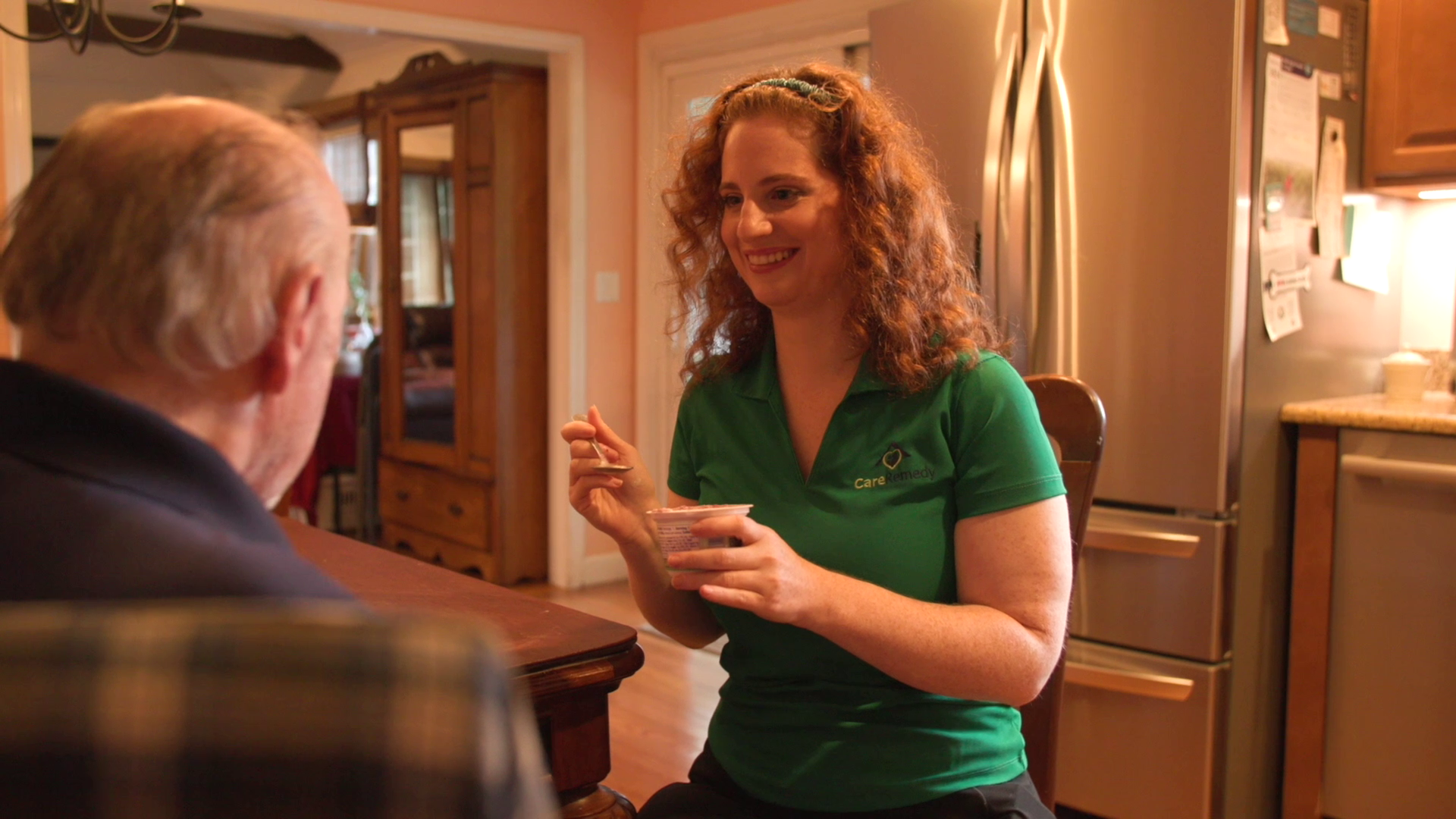
This is the part families often get wrong in both directions. Some assume a medical alert pendant means Mom is "covered," full stop — but a device only helps if someone responds, and a monitoring center calling 911 still means a fall happened and no one was there to catch it. Others assume technology is a lesser option and go straight to full-time placement. In our experience, the families who do best combine the two: assistive technology for round-the-clock passive safety, plus scheduled visits from a home health aide or companion caregiver for the things devices can't do — bathing, meal prep, medication administration, conversation, and simply noticing when something seems different in person.
If your parent is currently in a nursing home or a short-term rehab stay after a hospitalization, this combination is often exactly what makes a safe return home realistic. A discharge planner may recommend a higher level of ongoing care than your family expected; a well-set-up home with the right monitoring and a part-time or full-time aide can frequently meet that same safety bar in a home setting instead.
What to actually look for when choosing a system
- Does it work outside the home, or only near a base unit? Many falls happen in the yard or garage, not the living room.
- Is fall detection automatic, or does it require pressing a button? Automatic detection matters most for anyone with a history of falls, dizziness, or fainting.
- Is there a real person on the other end, 24/7, and how fast do they typically respond?
- Can a family member get alerts directly, not just the monitoring center?
- Is it something your parent will actually wear? The best device is the one that doesn't end up in a drawer.
The bottom line
Assistive technology has genuinely closed some of the gap between "safe at a facility" and "safe at home," but it works best as one part of a plan, not the whole plan. If you're trying to figure out what combination of technology and in-person care actually fits your family's situation — including a transition home from a nursing home or rehab stay — that's exactly the conversation we have with families every week.
Not sure what level of support your parent actually needs? We'll help you figure out the right mix of technology and hands-on care for your specific situation.
Talk to Care RemedyShare