
Homemaker or Caregiver: Which One Does Your Parent Actually Need?
What a homemaker does Vs What a Caregiver does
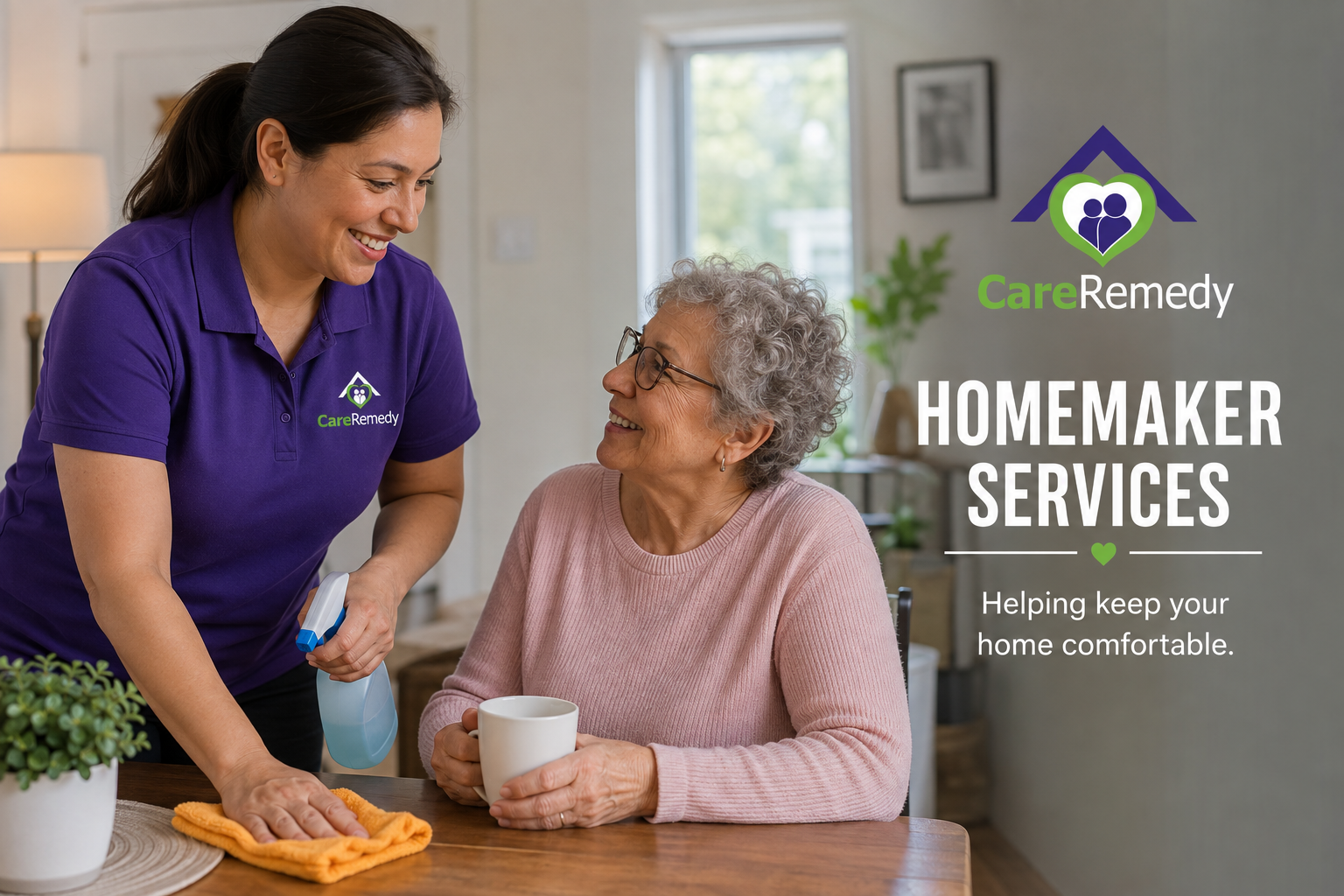
When you first start looking for help for an aging parent, the words all blur together. Homemaker, caregiver, companion, aide. People use them like they mean the same thing, and agencies do not always slow down to explain the difference. But the difference matters, because it changes what your parent gets, what it costs, and whether the person walking through the door is actually allowed to do the thing you need done.
Here is the plain version.
What a homemaker does
A homemaker keeps the house running. Think of everything that used to just happen on its own when your parent was well. The kitchen stayed clean. There was food in the fridge. Laundry got folded. The bed had fresh sheets. Bills and errands got handled.
When someone starts to slow down, those things quietly fall apart. A homemaker steps into that gap. They do light housekeeping, wash and fold laundry, cook meals, shop for groceries, and run small errands like picking up a prescription. Their job is the home itself, not the body of the person living in it.
That last point is the key one. A homemaker does not help your mother bathe, get dressed, or move from the bed to a chair. That is a different kind of work, and it needs a different kind of training.
What a caregiver does
Caregiver is the broader word, and that is why it confuses people. A caregiver focuses on the person. Depending on their training, that can mean two things.
At the lighter end, a caregiver provides company and supervision. They sit and talk, play cards, go for a walk, remind your father to take his pills, and keep an eye on him so he is not alone all day. This is often called companion care. It is about safety and connection more than tasks.
At the more involved end, a trained caregiver, usually called a home health aide, adds hands on personal care. This is the bathing, the dressing, the help getting to the bathroom, the steadying hand moving from bed to wheelchair. This work touches the person directly, so the state expects real training behind it.
So a caregiver might do very light work or fairly serious work. The word alone does not tell you. You have to ask what that specific caregiver is trained and hired to do.
The simplest way to tell them apart
Ask one question. Is the help about the house, or about the person?
If your parent is safe and steady on their feet but the home is falling behind, meals, cleaning, laundry, shopping, that is a homemaker.
If your parent needs company, supervision, or a hand with bathing and dressing, that is a caregiver.
Most families discover they need a bit of both, and that is completely normal. The good news is that one person can usually cover more than one role in a single visit. A caregiver can cook lunch and then sit and talk. A homemaker who also does companion work can tidy the kitchen and then take your mother out for groceries. The one line that cannot be crossed without proper training is hands on personal care. That always requires an aide who is trained for it.
Why the label still matters
If it all overlaps, why bother with the words at all? Two reasons.
The first is cost. Household and companion help is the more affordable tier. Hands on personal care costs more because it takes more training. If you hire a personal care aide to do nothing but dishes and laundry, you are paying a higher rate for lighter work.
The second is safety and honesty. If your father genuinely needs help getting out of the bathtub, a homemaker is not allowed to do it, and asking them to is how people get hurt. Matching the right role to the real need protects everyone.
How to decide
Spend a week noticing what actually goes wrong. Is the fridge empty and the laundry piling up, or is your mother unsteady, lonely, and struggling to manage her own care? Write down what you see. Then when you call an agency, you can describe the real situation instead of guessing at a job title, and they can match the right person to it.
Start light if you are not sure. Many families begin with a few hours of homemaker or companion help each week and add more as they learn what their parent needs. It is far easier to add hours than to undo a plan that was too much too soon.
The bottom line
A homemaker cares for the home. A caregiver cares for the person. One keeps the house working so your parent can stay in it. The other keeps your parent company, safe, and, when needed, physically cared for. Knowing which one you are looking for is the first real step toward getting the right help, at the right price, without overthinking it.
If you are not sure which fits your family, a good agency will talk it through with you before you commit to anything.
Share