Home Care for COPD in Massachusetts: Why Bathing Is the Hardest Part
Need help in Massachusetts? Care Remedy provides home health aides at $45 an hour, stair assistance at $200 a visit and wheelchair transportation from $115 each way. Call 781-957-8076 .
Showering and dressing are the most oxygen hungry things most people with COPD do all day. Arms above the head, steam, bending for socks, and no free hand for the walker. That is why somebody with COPD quietly stops washing, and why families usually discover the problem months after it started.
Home health aide care is $45 an hour, one to eight hours a day, no minimum contract and no assessment fee. For most COPD households the right purchase is a few mornings a week, not a full schedule.
What does an aide actually change?
- Bathing, seated and unhurried. A shower chair, a handheld shower head, and somebody to do the reaching. The goal is getting washed without ending up breathless for an hour afterward.
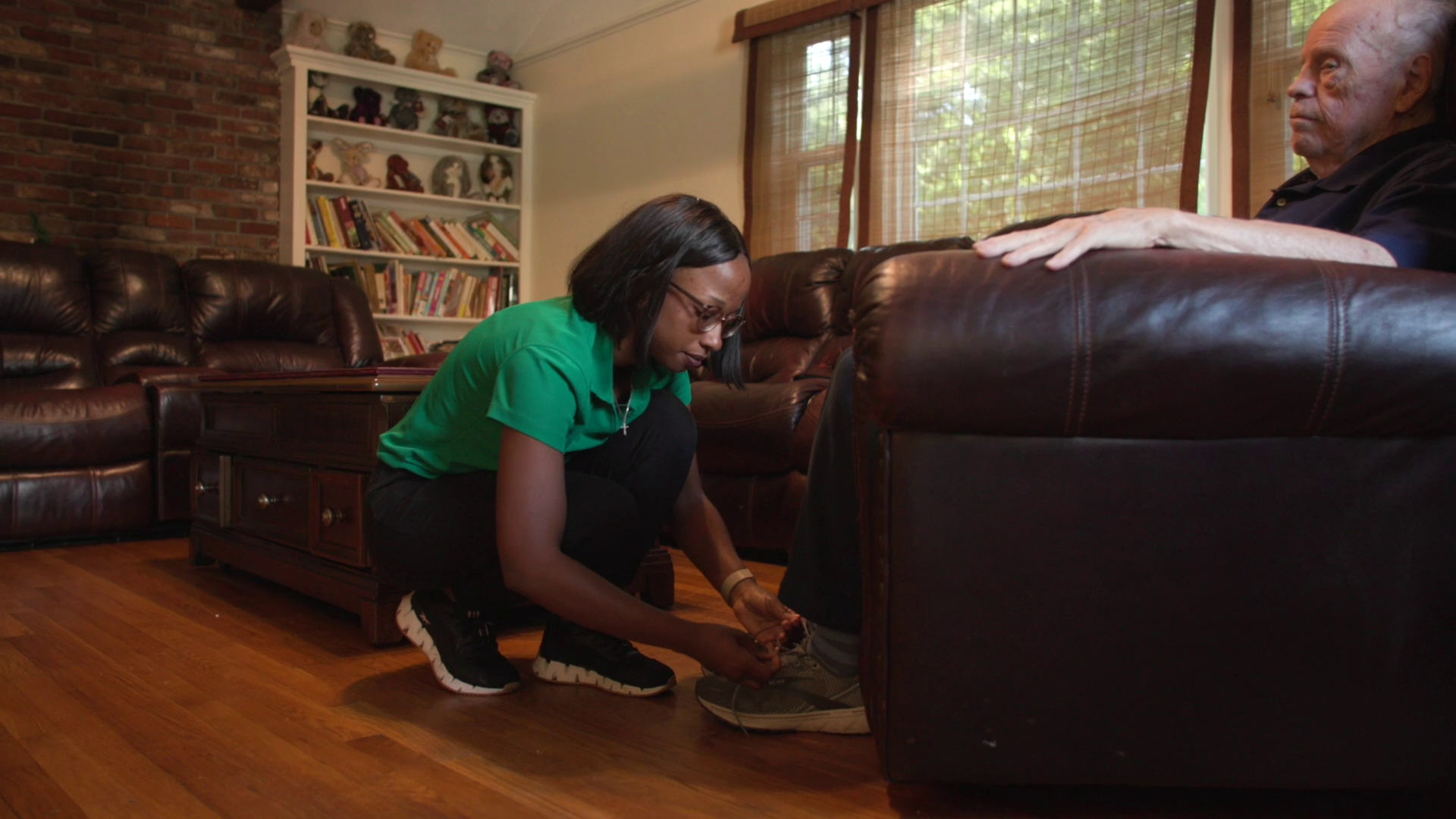
- Dressing sitting down, with clothes laid out in reach. Socks and shoes are the worst offenders because of the bending.
- Pacing the day. Hard tasks spread out with rests between rather than stacked into one morning, which is how people end up in a flare.
- Small meals, often. A heavy meal presses on the diaphragm and makes breathing worse, and eating itself is tiring, so people lose weight without noticing. Several small plates beat two big ones.
- Carrying, reaching and stairs. Laundry baskets, groceries, anything overhead.
- Keeping the house workable. Dust, strong cleaning products, aerosols and smoke all make it worse, so how the house gets cleaned matters as much as whether it gets cleaned.
Can an aide handle the inhalers or the nebulizer?
No. Our aides are trained, background checked and insured but they are not nurses and cannot administer medication, and inhalers and nebulizer treatments are medication. They can be present while a client takes their own, help if something goes wrong, and call for help.
Ask the pulmonary team to check inhaler technique at the next visit, because a large share of people are not getting the dose they think they are. That is worth more than almost anything we sell you.
What about oxygen in the house?
An aide works around it: tubing kept clear of walking paths, the concentrator where it will not be tripped over, nothing with an open flame anywhere near it, and absolutely no smoking in the house by anyone. Tubing across a floor is a genuine fall hazard in a home where somebody is already short of breath.
If you need a ride and the person travels with oxygen, say so when you book rather than on the day. That changes what we can send, and we would rather tell you on the phone than turn up with the wrong vehicle.
How do we stay out of the hospital?
COPD is one of the conditions people get readmitted for most often, and the admissions cluster in winter. The pattern is almost always the same: a cold that would be nothing to anybody else turns into a flare over three or four days.
So ask any agency you are considering what happens when the scheduled aide wakes up with a sore throat. An agency that sends her anyway, or sends nobody and does not tell you, is the wrong one for this household. Ours stays home and somebody else comes.
An aide who is there several mornings a week also notices the change early: more breathless than Tuesday, a cough that sounds different, less appetite, sleeping sitting up. Those get reported to you the same day rather than discovered at the weekend. Noticing is not diagnosing, and it is most of what keeps somebody out of an emergency room.
What should we ask the doctor about?
Two things, before you buy any hours from anybody. **Pulmonary rehabilitation**, which is a supervised exercise and education program and is one of the better established things available for COPD, and whether there is an **action plan** written down for what to do when symptoms worsen. A household with a written plan on the fridge handles a bad week very differently from one without.
Pulmonary rehab usually means two or three trips a week for several weeks. Ask your town's Council on Aging about rides before paying for them.
How many hours do people buy?
Often three hours, two or three mornings a week, which covers the shower, the dressing, the laundry and a cooked meal. That runs about $1,170 a month at three hours twice weekly. Daily coverage is rarely the right answer for COPD unless the person is also unsteady on their feet.
Expect it to need to grow in winter and shrink in summer. With no minimum contract you can move it both ways.
Is there help that costs nothing?
Three to check first. Your local Aging Services Access Point runs an income based state home care program. Your town's Council on Aging for rides and meals. And if the person is on MassHealth Standard or CommonHealth and needs physical help with at least two daily activities, PCA hours cost the family nothing, though you do the hiring yourself.
Care Remedy serves eastern and central Massachusetts from offices in Woburn, Brockton and Springfield. Call 781-957-8076 and tell us which part of the day is hardest.
This is general information about care at home and not medical advice. Oxygen use, inhaler technique, activity limits and what to do in a flare come from the treating pulmonary team.
Share