How Much Help Will You Need at Home After Surgery?
Somewhere in the pre operative call, a nurse asks whether you have somebody at home. Almost everybody says yes, because saying no feels like admitting something, and because at that moment it sounds like a formality.
It is not a formality. For a lot of procedures it is a condition of being allowed to leave, and for the rest it is the difference between a straightforward recovery and a bad fortnight. Here is what the question actually means, what each kind of surgery requires, and what to do if the honest answer is no.
Two different things get called the same thing
Families muddle these constantly, and they have completely different costs.
- The escort. One person, on the day. They come into the building, are physically handed over to, drive you home and in many cases are expected to stay for the first twenty four hours. This is a hard requirement after sedation and the hospital will cancel rather than waive it.
- The recovery help. Days or weeks of somebody doing the things you temporarily cannot. Nobody checks whether you have this. It is entirely on you, and it is what actually determines how the recovery goes.
What each kind of surgery really needs
Your own surgical team sets your restrictions and their instructions beat anything on this page. But the practical shape is fairly consistent.
Day procedures under sedation. Colonoscopy, endoscopy, cataract surgery, a pain injection, a cardiac procedure. The sedation, not the procedure, drives the rule. You cannot drive, you cannot sign anything meaningful, and you should not be alone overnight. A taxi does not count and a rideshare definitely does not count, because nobody is accepting responsibility for you at the desk. The full version of the escort problem is here.
Hip or knee replacement. The big one, and it has its own page: what the first two weeks actually take, and how many hours.
Abdominal surgery. Hernia repair, gallbladder, bowel surgery, hysterectomy. The lifting restriction is the whole story and people badly underestimate it. A typical instruction is nothing heavier than a gallon of milk for several weeks. Now count what that rules out: a full laundry basket, a bag of groceries, a cast iron pan, the vacuum, a grandchild, a cat. It is not the surgery that gets people, it is week two, feeling fine, deciding to strip the bed.
Cardiac surgery with a sternal incision. The restrictions are on pushing and pulling with the arms, which is how most people get out of a chair, out of bed and out of a car. Expect a long period of not driving. This is the group that most often needs somebody there daily for several weeks, and the group that most often has an equally elderly spouse trying to cover it.
Spinal surgery. Typically no bending, lifting or twisting for a defined period. Which means nothing gets picked up off the floor, shoes and socks become a genuine problem, and the bottom shelf of the fridge may as well not exist.
Anything with a wound, a drain, an ostomy or IV antibiotics. That part is skilled nursing through a Medicare certified agency, which is a different service from ours. What that agency does not do is the rest of the day, and that gap is where most people get caught.
Three questions that size it properly
Forget the diagnosis for a moment. Answer these three honestly about the first week and you will know what you need.
- Can you get to the bathroom on your own, at three in the morning, in the dark? If the honest answer is not quite, you need somebody overnight or you need the bed moved.
- Can you get food into yourself without carrying anything or bending down? If not, you need a daily visit or a freezer full of meals prepared beforehand.
- Can you wash properly and safely? Getting in and out of a tub is where post surgical falls happen, and it is the task people quietly abandon rather than ask about.
One yes means you probably need a few visits. Two or three noes means you need somebody there every morning for the first week or two, and that is a perfectly ordinary thing to buy.
What it costs, and why it is smaller than people fear
Home health aide care is $45 an hour, one to eight hours a day, with no minimum contract and no assessment fee . For surgery that last part matters more than the rate, because you are buying two or three weeks and then stopping.
- A single daily morning hour covering medication, breakfast and a wash: $315 a week.
- Three hours, three mornings, for the shower, the laundry and the shopping: $405 a week.
- Four hours every weekday for a harder first fortnight: $900 a week.
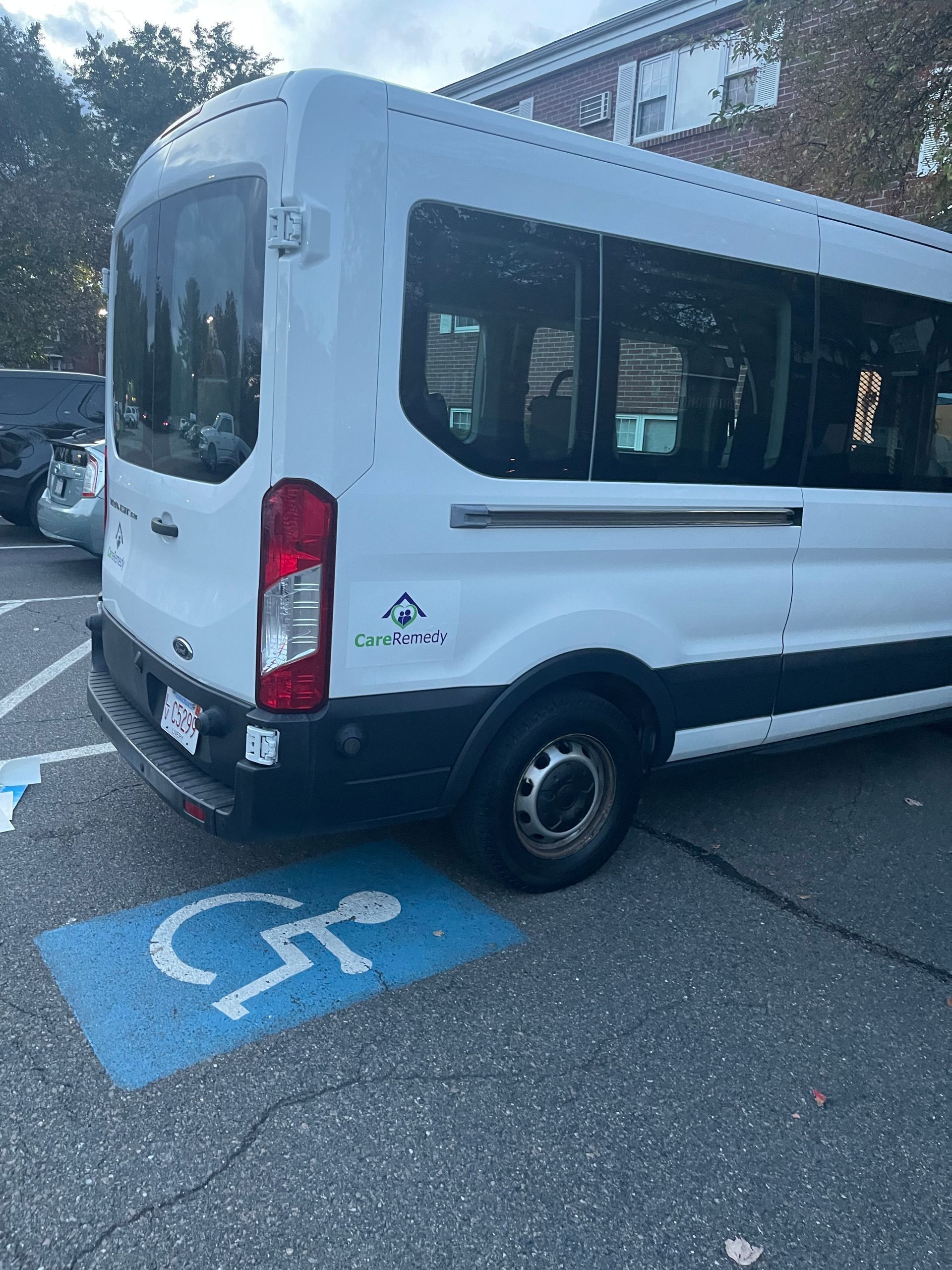
- An escort and a ride for the procedure itself: wheelchair transport is $115 each way, or $230 round trip, within five miles and then $2 a mile.
Worth asking any other agency you call what their minimum visit is before you compare prices. A four hour minimum is common in this state, and it quietly turns a one hour need into a four hour bill.
If the honest answer is that you have nobody
This is far more common than the pre operative call makes it feel, and it is not something to be embarrassed about. People are widowed, children live in other states, friends are the same age and cannot drive at night either.
What you should not do is say yes on the phone and hope to work it out later. Procedures get cancelled on the morning for exactly this, after the prep, after the fasting, and the next slot is six weeks away.
Say so instead, and ask the scheduler what their policy is. Some units will accept a professional escort, some will not, and they will tell you plainly if you ask two weeks out rather than two hours out. Then arrange it. We do this, and it is a normal booking rather than an unusual one.
Book it before, not after
The single most useful thing on this page: arrange the help two or three weeks before the date, not the morning after you get home.
Booking in advance means the same person every day rather than whoever is free, it means we have seen the house and the front steps beforehand, and it means you are deciding while you feel well rather than at the point where somebody is already home and struggling. Families who arrange care after the fact almost always buy more hours than they needed, because fear is doing the estimating.
Where to go from here
- For the recovery itself. Tell us the procedure, the date and the layout of the house and we will size it on the call. $45 an hour, no minimum contract.
- For the ride, the escort and the front steps. Book here. Wheelchair transport is $115 each way; stair assistance is $200 a visit with two trained staff and a motorized chair.
Care Remedy Inc, 100 TradeCenter Suite G-700, Woburn, MA 01801. Call 781-957-8076 . Home health aide care, wheelchair transportation and stair assistance across Greater Boston, with offices in Woburn, Brockton and Springfield.
Sources: Medicare, home health services. Our rates are current as of publication. Restrictions, escort policies and recovery timelines differ by procedure, by surgeon and by hospital, so follow your own surgical team's instructions and confirm escort requirements with the unit. This article is general information and is not medical advice.
Share