
When a Parent Says No to In-Home Care: How to Start the Conversation
Stop asking her permission and start asking for her help. "Mum, will you let a caregiver come?" invites a no, and once she has said it out loud she has to defend it. "Mum, I cannot keep driving down every Saturday and I am exhausted. Would you let somebody come Tuesdays so I can keep my job?" is a different question, and most people say yes to that one.
This is the most common reason families do not get help, and it is almost never really about the stranger.
What the refusal is usually about
Three things, in roughly this order.
- It is the first step toward a nursing home. In her mind, accepting help is the beginning of losing the house. Nobody says this out loud. Say it for her: this is how people stay at home longer, not how they leave.
- Money. Plenty of people refuse because they think their children cannot afford it, or because they are not telling anybody what their savings actually look like. If she thinks it is bankrupting you, she will say no forever and never give the real reason.
- Being seen. Being washed by a stranger, or having somebody see the state of the kitchen. This one is real and it deserves respect rather than a counterargument.
Arguing with the stated reason gets you nowhere, because it is not the reason.
Six things that actually work
- Make it about you, not her. She will accept help to relieve her daughter long before she accepts help for herself. This is not manipulation, it is true, and it lets her be the one giving rather than receiving.
- Do not start with the bathroom. Start with driving, laundry, cooking or the shopping. Tasks, not the body. Personal care comes later, after she knows the person, and by then it is a different conversation.
- Call it anything but caregiver. A hand around the house. Someone to help with the driving. The woman who comes Tuesdays. Nobody wants a caregiver. Everybody wants a hand.
- Make it a trial with an end date. "Give it four Tuesdays and if you hate it we stop." An offer she can refuse later is far easier to accept now, and almost nobody stops at four.
- Let her interview them. Give her the decision she can actually win. Which day, who, what they do first. People fight to keep control, so hand her some.
- Get the right person to ask. Not always the daughter who nags. Sometimes the son she never argues with, sometimes her doctor, sometimes a friend who already has someone coming in. If her GP says it, it stops being a family argument.
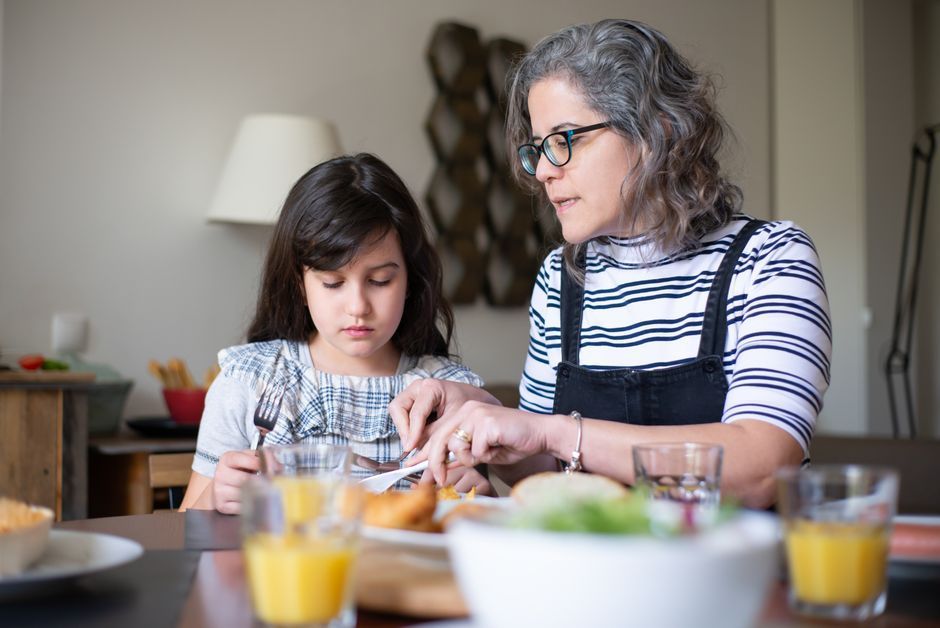
The conversation goes better when the ask is about relieving you, not about her declining.
What not to do
- Do not ambush her. Booking somebody and announcing it on the doorstep will cost you a year. She will refuse on principle and be right to.
- Do not list her failures. The burnt pan, the missed pills, the fall she did not mention. Every item is evidence she is finished, and she will fight the whole file.
- Do not make it a family vote. Three siblings on speakerphone is an intervention, and people dig in when they are outnumbered.
- Do not threaten the nursing home. Even gently. It confirms exactly what she is afraid of, and she will never trust the next conversation.
The first visit decides everything
If it goes badly she will cite it for two years. So stack it. Be there yourself for the first one, and leave partway through rather than hovering the whole time. Keep it short, two or three hours. Give the aide one concrete job, not a vague brief to help out, because a stranger standing in the kitchen with nothing to do is awkward for everyone.
Tell us beforehand that she did not want this. It changes who we send and how they come through the door. It is a common situation and the right aide handles it by being useful and unhurried rather than cheerful and in charge.
What if she still says no?
If she has capacity, she is allowed to refuse, and that is genuinely her right even when you are certain she is wrong. Pushing harder usually costs you the relationship and changes nothing.
What works instead is being ready. Most refusals end at a hospital discharge, a fall, or the week a daughter physically cannot come. Have the conversation with us now, so when that week arrives you are making a phone call rather than starting a search. People who call us in a crisis get help; people who called us in advance get the right person.
If you are worried she is no longer safe and no longer able to judge that for herself, that is a different problem than refusal, and it belongs with her doctor and your local Aging Services Access Point rather than with us.
Why a small start is easy to say yes to
Home health aide care is $45 an hour , one to eight hours a day, with no minimum contract and no assessment fee . Three hours on a Tuesday is $135, and you can stop whenever you like. Most agencies in Massachusetts require four hours a visit and twenty hours a week, which forces you to ask your mother to accept far more than she is ready for. That requirement is why a lot of these conversations fail.
Start at the size she will agree to. It grows on its own.
Talk it through first
Call 781-957-8076 . You can call before anybody has agreed to anything, and plenty of people do. Tell us where she is, what she will and will not accept, and who she listens to. We work out of Woburn, Brockton and Springfield and cover most of eastern and central Massachusetts.
Our aides are trained, background checked and insured. They are not nurses and do not administer medication.
Share