Rides After a Dilated Eye Exam or Eye Injection in Massachusetts
Need help in Massachusetts? Care Remedy provides home health aides at $45 an hour, stair assistance at $200 a visit and wheelchair transportation from $115 each way. Call 781-957-8076 .
Arrange a ride. Dilating drops leave near vision blurry and eyes sensitive to light and glare for about four to six hours, and for some people most of a day. The difference from sedation is that nobody will stop you at the door, so this is a decision you have to make in advance rather than one the office makes for you.
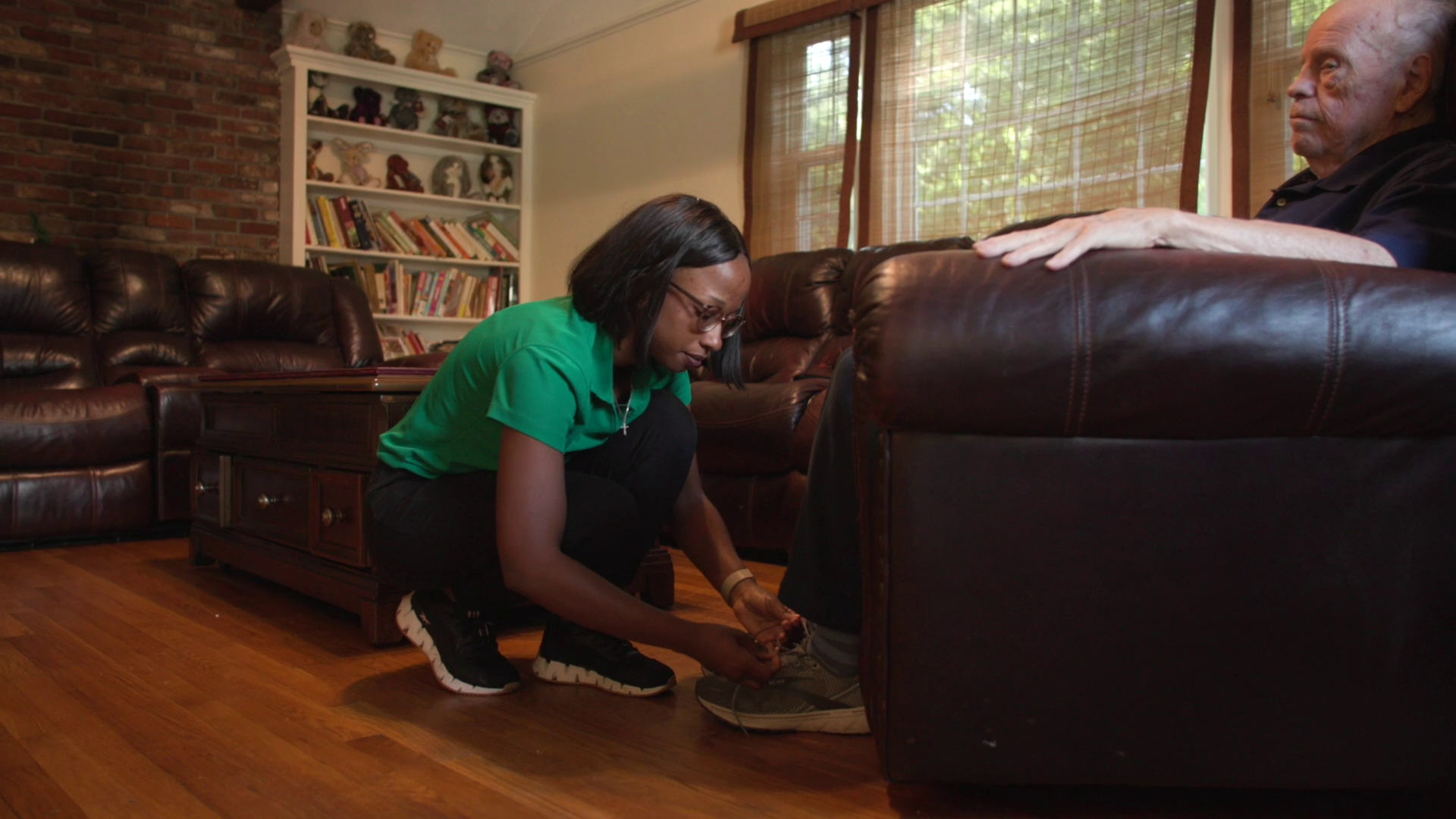
A Care Remedy aide with a client at an appointment. For a dilated eye visit the useful part is the walk out and the ride home, not clinical care.
Can you drive after a dilated eye exam?
Not comfortably, and the published guidance is split on whether you should at all. We did not find a Massachusetts law that prohibits driving with dilated pupils. WebMD notes that some experts say to stay off the road entirely while others say it depends on how comfortable you feel. All About Vision is more direct and calls driving with blurry vision dangerous, advising a driver if your vision is still unclear even with sunglasses. The practical test is simple. If you cannot read the dashboard, and oncoming headlights or midday sun hurt your eyes, you should not be driving.
How long do dilated eyes stay blurry?
About four to six hours for most people. All About Vision reports that dilation can last as long as 24 hours, and that children and people with lighter colored eyes may stay dilated for up to that full day. The effect is mostly up close, so distance vision can feel almost normal while reading a phone or a discharge sheet is impossible. Bright light causes real glare because the pupil cannot shrink down to block it.
Do you need a ride home after an eye injection?
Ask your own retina doctor, because this one is set per patient. The American Academy of Ophthalmology says instructions vary depending on the doctor, the status of your eyes and vision, and your overall health, and that your doctor can best advise you on transportation. One detail is worth knowing before you plan to rely on your untreated eye. The Academy notes that the doctor may dilate both eyes in order to monitor the second one. If that happens, you have no clear eye left to drive with.
Will the eye office let you leave alone?
Usually yes. Dilating drops are not sedation, so the office is not required to release you to a named adult the way a surgical center is after anesthesia. Nobody hands you a form or keeps you in the waiting room until a ride shows up. That is exactly why people get caught out. The rule that forces other patients to plan ahead is absent here, so the planning has to come from you.
What does a ride to an eye appointment cost?
Wheelchair accessible transportation is $115 each way, or $230 round trip, within five miles, then $2 a mile beyond that. If you walk on your own but want someone with you through check in, the waiting room and the ride home, that is home health aide care at $45 an hour, one to eight hours a day, with no minimum contract, no assessment fee and no four hour minimum per visit. The full breakdown is on our page on how much wheelchair transportation costs in Massachusetts. Eye injections often run on a repeating schedule set by your doctor, so if you are booking the same trip every few weeks, ask about a standing arrangement instead of calling each time. We price recurring trips on our monthly ride plan page.
Is there a cheaper or free ride you should try first?
Often, yes, and for a short eye visit in your own town you should try these before paying us anything.
- Your local Council on Aging. Many Massachusetts towns run free or low cost senior van rides.
- MBTA paratransit, if you are eligible. It covers much of greater Boston at a fraction of private rates.
- MassHealth members can ask the eye practice to submit a transportation request on their behalf, which is how MassHealth covers rides to covered appointments.
- The practice itself. Large eye clinics often have a patient navigator or social worker whose job includes finding patients a ride.
We are the right call when those options are booked up, too slow, do not run at your appointment time, or cannot handle a wheelchair or a flight of stairs at the door.
What will the aide not do at the appointment?
Our aides are trained, background checked and insured, and they are not nurses. They do not administer medication, and prescription eye drops count as medication. An aide can be present while you put your own drops in, can help if something goes wrong and can call for help, but cannot put the drops in for you as a treatment. They do not change dressings or eye patches, and they do not make clinical judgments about whether your eye looks right. Those tasks need a nurse, which is a separate service priced separately.
How do you book one?
Call 781 957 8076 or email info@careremedyinc.com with the appointment time and the address, and tell us whether you need the wheelchair van or just a person with you. If the appointment is at Mass Eye and Ear, our page on parking, drop off and rides home there covers which entrance to use. We serve communities across Massachusetts from offices in Woburn, Springfield and Brockton.
Care Remedy is not affiliated with any hospital or eye practice. This page is general information and not medical advice. Ask your own eye doctor what you should do after your appointment.
Share